
Birthright Citizenship: America’s Founding Promise Under Threat
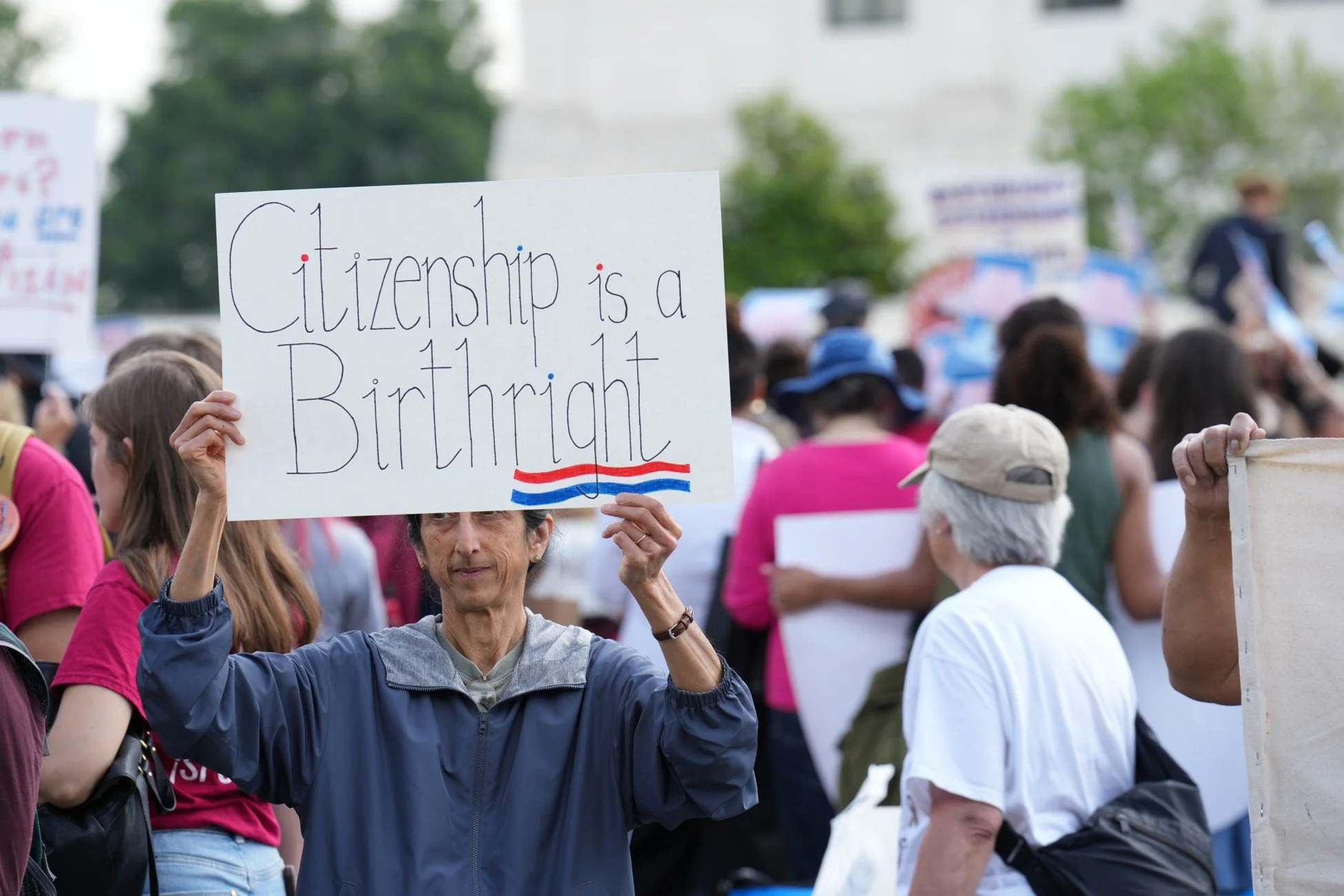
Zeynep Karatas, Impact Fund Spring Grants Intern
EO 14160 and Barbara v. Trump
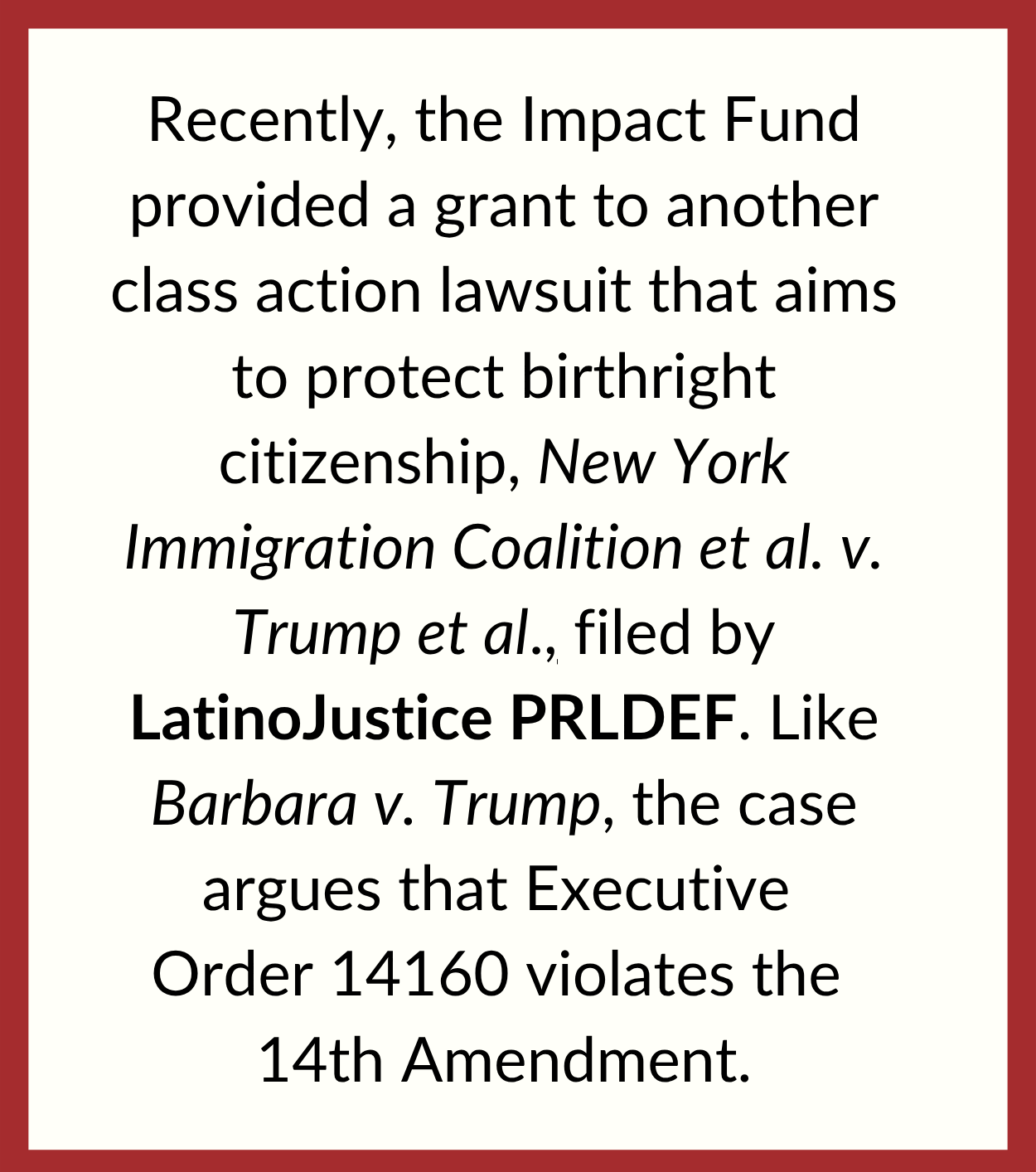
On January 20th, 2025, President Donald Trump issued Executive Order 14160, titled “Protecting the Meaning and Value of American Citizenship,” aiming to end birthright citizenship. In response, numerous civil rights groups, including the ACLU, the Asian Law Caucus, and the NAACP Legal Defense and Education Fund, filed a class action lawsuit named Barbara v. Trump. The lawsuit, one of many pending cases on the issue, argues that EO 14160 is incongruent with the history and text of the 14th Amendment, Supreme Court case law, federal statute, and the understanding and practice of all three branches of the federal government for more than a hundred years.
Within one month of Barbara’s filing, the court issued a preliminary injunction enjoining the government from enforcing the Executive Order against a nationwide class of babies targeted by the Order. On April 1, 2026, the Supreme Court heard oral arguments in the case and will likely rule on Barbara v. Trump in the next few weeks.
The results of this case will not only determine the fate of the Executive Order, but may terminate birthright citizenship, a vital right that has protected the rights of children born in the U.S. since the country’s founding.
This blog post explores the potential ramifications of this ruling and its impact on the definition of who can be an American. For more information on the history of birthright citizenship and the 14th Amendment, see my corresponding post “History of Birthright Citizenship: A Founding Principle of the U.S.”
Impact of Overturning Birthright Citizenship
Birthright citizenship has been a core part of the country’s immigration system for generations, as well as one reason for America’s unique diversity. Thus, while BIPOC communities would be most immediately affected if the Supreme Court terminates birthright citizenship, overturning this bedrock principle would impact every single community in the U.S.
How Communities Might Be Impacted
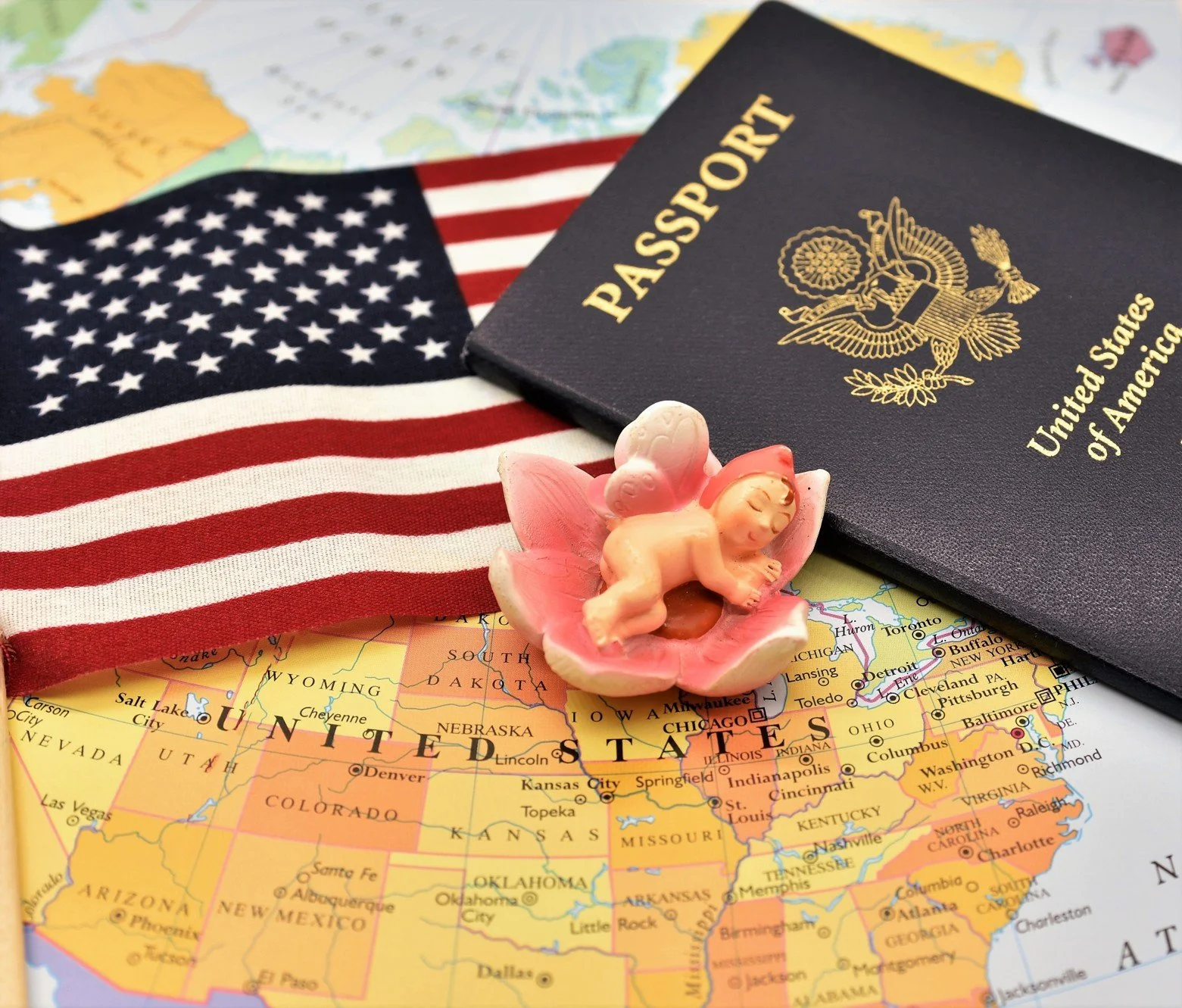
Eliminating birthright citizenship would further marginalize immigrant families.
To better understand the complex effects of terminating birthright citizenship, I talked with Winnie Kao, Senior Counsel at Asian Law Caucus and a member of their Barbara v. Trump legal team. She is also on the Impact Fund Board of Directors.
Part of Kao’s work on the case involves answering questions from class and community members about the case’s progress and their rights, highlighting what is at stake for those affected. When we spoke in April 2026, she explained that the federal executive order impacts not only undocumented families, but also “parents who are here on work visas, student visas, asylum seekers, TPS holders, U and T visas, DACA recipients, and others. Those targeted by the EO include people who are in the United States with legal authorization, just on a temporary basis.”
Kao has received an influx of questions about the effects of Executive Order 14160. Some of her clients, for example, questioned whether they should move to a different state that was pushing back against the EO. Others asked even more extreme questions, such as: “Should I try to induce and have my baby sooner now while the executive order is still enjoined? Would that help protect my baby more?”
Economic and Political Consequences
Kao’s clients are right to be worried. If the Supreme Court eliminates birthright citizenship, the Migration Policy Institute (MPI) estimates that the undocumented population in the U.S. would rise by approximately 5 million people in the next two and a half decades. In the long run, the policy would prevent even children born in the U.S. to two U.S.-born parents from obtaining citizenship, impacting around 1 million babies by 2050. Such a policy would create a large underclass of people permanently marginalized and excluded from fully participating in our democracy.
The decision would also have profound impacts on the U.S. economy and bureaucracy. Stripping a generation of their ability to legally obtain jobs would create a labor shortage and a market of labor abuse. Funding for Social Security would also suffer as the contributing labor pool shrinks. More rigorous requirements and processes for obtaining citizenship would further backlog courts and complicate sub-federal agencies’ citizenship verification and issuance processes, creating additional work for a significantly weakened federal agency system.
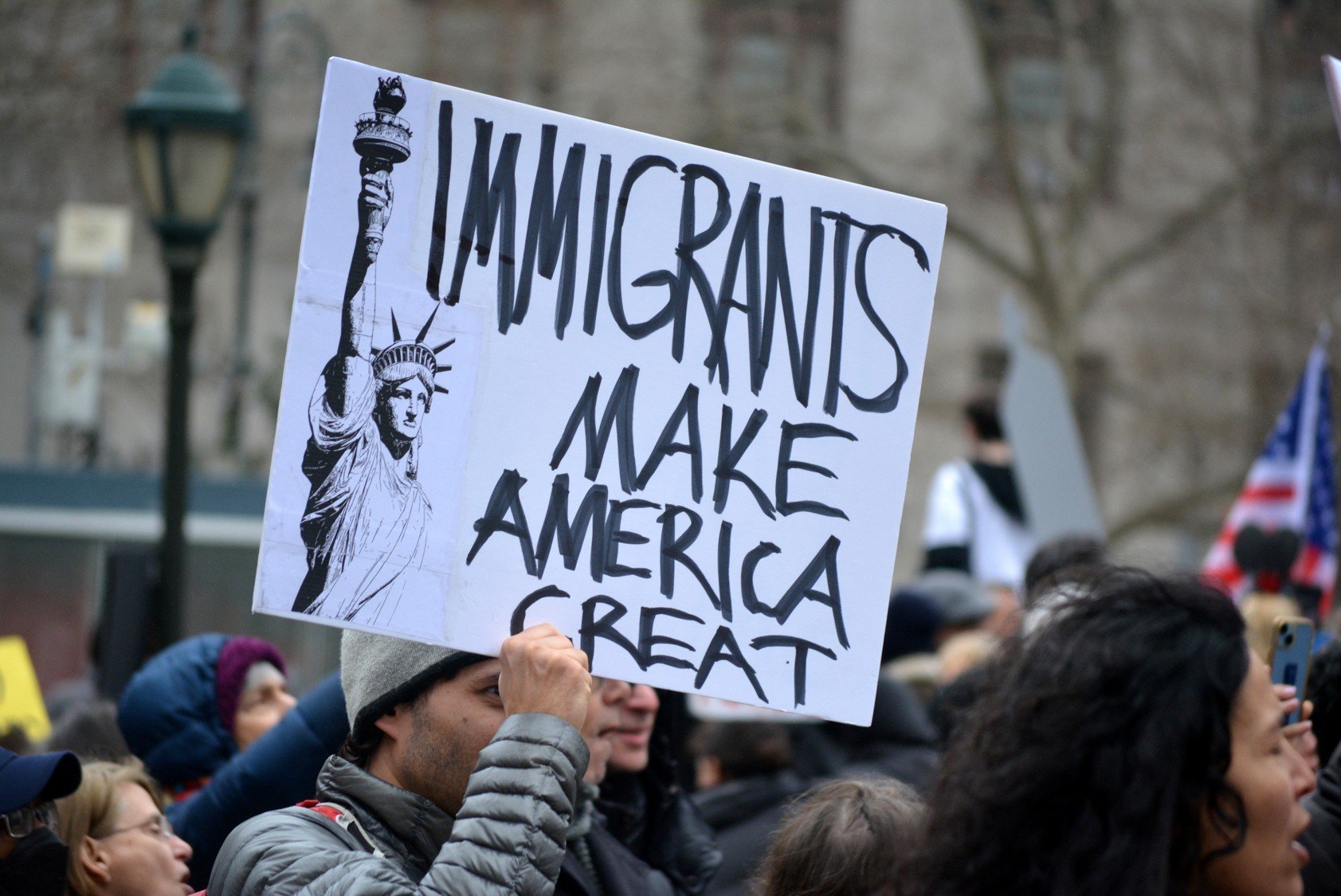
This is the moment to stand up for diversity and the fundamental values of American society.
What You Can Do to Help
Today, birthright citizenship is still a constitutionally enshrined and legally codified right. While the Supreme Court has the final authority when it comes to speaking on the legality of birthright citizenship, individuals and organizations can nonetheless exercise their First Amendment rights to express their beliefs and support those who are at the forefront of this work. Getting our voices heard will build needed pressure to protect this fundamental right.
Community members, especially those with legally recognized citizenship, can also take a more active role in advocating for birthright citizenship, signing petitions, joining local mutual aid organizations that uplift immigrants, and donating to organizations that protect immigrants’ basic rights.
For those in educational settings, teaching about the history of birthright citizenship and the ramifications of its elimination can make young people more mindful of the issue and help them understand the context of the current political moment.
Finally, everyone can reach out to their political representatives and ask them to advocate for immigrants’ rights at the local, state, and federal levels. Together, we can help defend birthright citizenship as critical to the most fundamental sense of what it means to be American.
Terminating birthright citizenship would greatly limit the diversity that makes American society unique—and erode one of the fundamental values that make this country so special.
--
Production Credits:
Author: Zeynep Karatas
Editors: Winnie Kao, Lindsay Nako, Rena Lu, Joshua Kay, Amy Daniewicz
Web Producer: John Henry Frankel
Web Editor: Teddy Basham-Witherington