
Impact Fund Grants Support Immigrants, Foster Youth, Student Protesters, and People with Disabilities

Josh Kay, Grant Program Associate
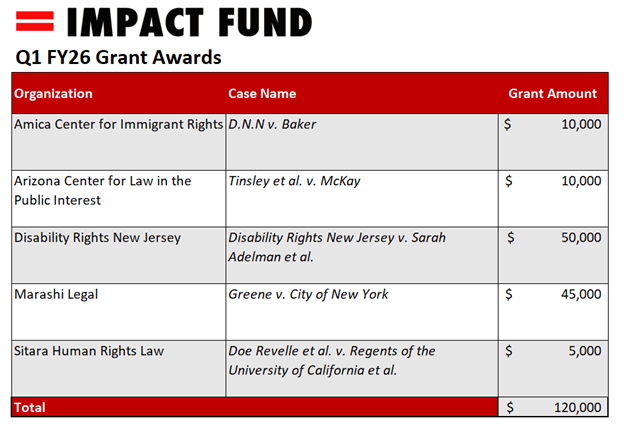
As we are confronted by fresh assaults on the fundamental rights and wellbeing of people in this country and internationally, we are incredibly grateful for the inspiration our community and grantees provide us through their grit and determination. During the Impact Fund’s fall grantmaking cycle, we awarded a total of $120,000 to support impact litigation in five important cases across the country.
Immigrant Rights
As immigrant communities face horrific abuses of government authority, we are proud to be supporting an important legal challenge on behalf of those seeking to call this country home.

An analysis by The Guardian found that ICE increasingly kept people in holding rooms with little oversight, as some facilities see a 600% rise in detention length.
The Amica Center for Immigrant Rights is continuing their fight to hold ICE accountable for its violation of the rights and safety of the people it has in custody. In this case, they are challenging the inhumane detention conditions and denial of access to counsel of the Baltimore Field Office.
ICE’s own policy states that if people cannot be held humanely, they should be released, but ICE is instead utilizing short-term holding cells to detain people in inhumane conditions for far longer than is safe. People are being held in severely overcrowded cells, and ICE is denying them access to basic necessities like food, potable water, bathrooms, medication and medical care, and contact with family and legal counsel. Victory in this case would require ICE to follow its own policies and protect the dignity, rights, and safety of the people being detained.
Disability Justice
The Impact Fund has a long history of supporting the rights of people with disabilities, and we are glad to continue this work with two new grantees.
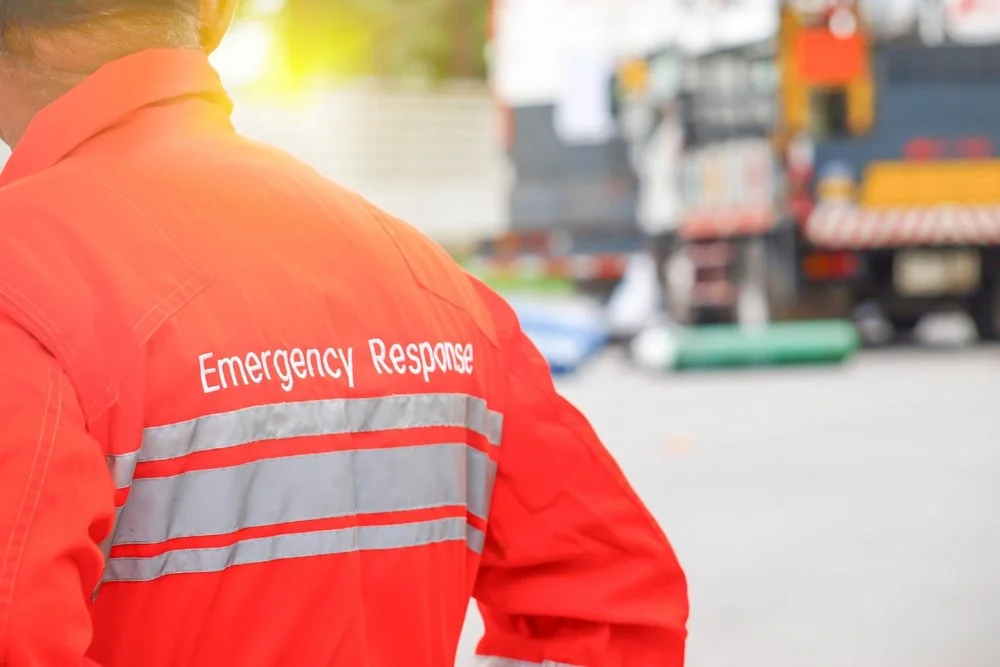
Health professionals are trained to de-escalate mental health crises.
In New York, Marashi Legal is bringing a class action on behalf of people with disabilities to ensure that people experiencing mental health crises are met with care and support, not excessive force and detention. Unlike physical health crises, where paramedics and EMTs are sent to stabilize and treat individuals, people experiencing mental health emergencies are confronted by police officers. This often exacerbates the issue, resulting in arrests, involuntary commitments, and excessive use of force, which can result in serious injury or death.
This case seeks to reform the way that people in crisis are treated by the New York City emergency responders, making sure that people with disabilities are sent health professionals who can assess and deescalate the situation, provide health services, and make an informed decision about whether further treatment is necessary. Victory in this case would dramatically improve the safety and support available to people with disabilities, prevent unnecessary and often dangerous police deployments, and make sure that people in crisis get the help they need without fear of injury or death.
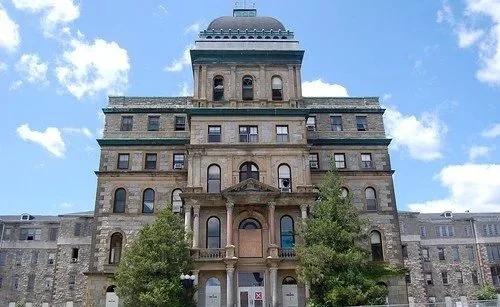
Greystone Park Psychiatric Hospital in Morris Plains, New Jersey, is one of the three hospitals named in Disability Rights New Jersey’s lawsuit.
Across the Hudson, Disability Rights New Jersey is challenging New Jersey’s state psychiatric hospitals on behalf of people with disabilities who are held without their consent. The lawsuit alleges that these hospitals are holding people long after they are ready to be discharged, are neglecting to provide community-based treatment options as required by law, and are failing to correct abusive and neglectful settings, putting patients in danger.
Involuntary commitment is a powerful tool of the state, which must be carefully bounded to prevent abuse – the Supreme Court has held that unnecessary institutionalization is a violation of the rights of people with disabilities. New Jersey’s use of involuntary confinement violates this principle, according to the case, and Disability Rights New Jersey is seeking to make sure that people with disabilities can receive safe, dignified treatment in community-based settings.
Foster Youth and Student Protesters
Our final two grants this fall quarter were made in the defense of the rights of young people.
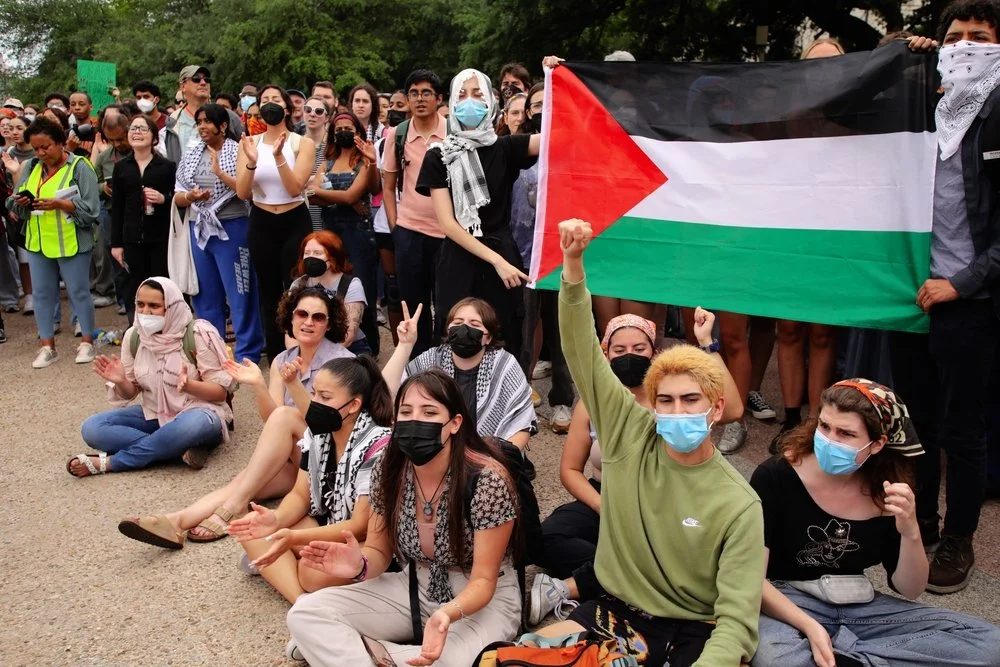
Many peaceful student protests of the war in Gaza occurred in the spring and summer of 2024.
In California, Sitara Human Rights Law has filed a challenge to UC San Diego’s blanket imposition of academic sanctions on student protesters. In May of 2024, over 60 students were arrested en masse for participating in an encampment on the UC San Diego campus to protest the war in Gaza. UC San Diego then imposed disciplinary sanctions, including academic probation, on the basis that some illegal activity occurred in the camp. By failing to provide evidence that an individual student subject to disciplinary action had actually personally committed some offense, and instead relying on general blanket claims, the case alleges that UC San Diego violated established due process rights of the students.
Sitara Human Rights Law is now seeking an expungement of the disciplinary record for all affected students, and a commitment by UC San Diego to follow established law in respecting the due process rights of students subject to disciplinary proceedings. This case stands up for the rights of students, preventing universities from applying blanket punishments against protestors regardless of their actual wrongdoing.

There are over 7,200 foster youth in Arizona’s care, nearly half of whom continue to live in congregate care.
The Arizona Center for Law in the Public Interest, coming off of an important trial victory on behalf of public school students, received funding to support their case on behalf of foster youth. In 2015, the Center filed a case alleging that Arizona was failing to provide necessary support to foster youth who needed medical and behavioral health services. The case called out Arizona’s overreliance on congregate care, which can exacerbate behavioral issues and further traumatize children. They argued that the state’s failure to provide sufficient foster and therapeutic foster homes harmed the very children they should be keeping safe.
Despite Arizona’s agreement to remedy the situation in 2020, they have failed to comply with the terms of the settlement. Now, years later, the Center and its allies are fighting to make sure that the state keeps the promise it made to the court and provides the foster children in its care the supportive services they need to succeed.
About the Impact Fund
The Impact Fund was founded in December 1992 to help advance economic, environmental, racial, and social justice through the courts. Originally envisioned as a purely grantmaking organization, the Impact Fund has made 814 grants totaling $10,459,129. Click here for Grant Criteria and information about Grant Deadlines.
Since its inception, the Impact Fund has grown to include both advocacy and education in its range of services. Today, the Impact Fund litigates a small number of cases directly, authors amicus briefs, provides a substantial amount of consulting to civil rights practitioners free of charge, and presents an annual conference for plaintiff-side class action practitioners, a training institute for budding public interest class action practitioners, and numerous seminars and webinars. Click here for the 2024 Annual Report.
What Is Impact Litigation?
Impact litigation is a lawsuit, often a class action, where the outcome of the case may have effects that reach beyond the parties to the case and advance economic, environmental, racial, and/or social justice for a community or a larger group of people who may not have access to the courts on their own.
Production Credits
Writer: Josh Kay
Editors: Amy Daniewicz, Teddy Basham-Witherington
Web Producer: John Henry Frankel
Web Editors: Amy Daniewicz, Teddy Basham-Witherington, Josh Kay