
I Refused to Be Silent: A Class Action for Dignity, Safety, and Change

Sdahrie Howard
To be recognized by the Class Action Hall of Fame is not something I ever imagined when this journey began. I did not set out to make legal history. I set out to survive. I set out to protect my dignity and respect. I set out to tell the truth when silence felt safer. And yet, here my story now lives, alongside others who dared to challenge injustice and use the law as a tool for collective accountability.
This case arose from widespread sexual harassment of women working in a correctional environment, including repeated exposure, lewd acts, sexual epithets, and other egregious conduct by people in custody, combined with an institutional failure to intervene. At its height, more than 1800 women were part of the certified class, making clear just how widespread and systemic the harm truly was. I became a lead plaintiff not only to speak for myself, but to help organize and encourage women to come forward, many of whom feared retaliation, professional consequences, or being dismissed.
When the class was later decertified, the case fractured. What had once been a collective of more than 1800 women was reduced to a little over 500 women who elected to continue on an individual basis. That drop was not a reflection of the harm disappearing, but of the fear, exhaustion, and risk that the system quietly imposes on those who speak up. Still, more than 500 women chose courage. Although the structure of the case changed and it ultimately concluded through settlement, the fight forced accountability, exposed systemic failures, and ensured that what we endured would not remain invisible.
Before the litigation, my life looked ordinary from the outside. I showed up to work every day in a demanding, male dominated correctional environment, committed to professionalism, accountability, and public service. I believed that if you worked hard, followed the rules, and treated people with respect, the system would do the same for you. I believed in the institution I served. I believed in fairness.
What I did not expect was that simply doing my job would mean enduring repeated humiliation, fear, and emotional harm, and being told that this was just part of the job.
I carried anxiety into every shift. My body would tense the moment I entered the parking lot. I learned to brace myself emotionally just to make it through the day. And what hurt the most was not only the behavior of people in custody. It was the institutional silence that followed. The minimizing. The excuses. The quiet message that my dignity was negotiable.
The injustice at the root of this case was not only sexual harassment. It was systemic indifference.
We were subjected to repeated exposure, lewd acts, sexual epithets, and other egregious acts that created a hostile and degrading work environment. But when we spoke up, we were met with hollow policies, inconsistent responses, and a culture that normalized abuse. Being told that this was just jail felt like being told that our pain did not matter. That our safety did not matter. That we were disposable.
We did not just feel unsafe. We felt like second class citizens in our own workplace, expected to endure abuse that would never be tolerated in any other professional setting.
I felt angry. I felt violated. I felt invisible. I felt betrayed by a system I had trusted to protect its workers. There were nights I went home and cried, wondering how long I could keep doing this without losing pieces of myself.
And then something shifted.
I realized that silence was not protecting me. It was protecting the system.
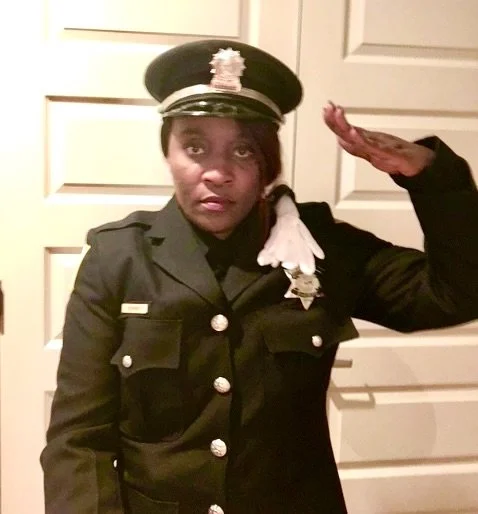
“There were moments I asked myself why I was still doing this when so many others walked away. There were moments I felt foolish for staying. And yet, something in me refused to quit.”
I decided to take a stand because I refused to accept that this was the cost of being a woman in certain professions. I refused to accept that humiliation and fear were normal working conditions. I refused to accept that the next generation of women should inherit the same trauma wrapped in a uniform.
Speaking up was terrifying. I knew there could be retaliation, career consequences, and reputational damage. But staying silent felt like complicity. This fight became bigger than me. It became about dignity. About accountability. About the right to work without being sexually terrorized.
One of the highest moments in the case was when the court initially certified the class. It felt like validation and the first real sign that justice might actually be possible. It was not just my story anymore. It was our story.
And then the lows came.
When the class was decertified, it broke my heart. Watching a fight that once held more than 1800 women narrow to just over 500 was devastating. I understood why many could not continue. Fear and exhaustion were real. But it was deeply discouraging to see how quickly collective power can be stripped away.
I felt abandoned. I felt angry that the system had once again succeeded in dividing us. Angry that justice had become something only the strongest or most stubborn could afford to pursue.
And the truth is this. The system benefits when victims are exhausted into silence, when collective action is fractured, and when people are made to feel that continuing the fight is too costly, too lonely, or too dangerous.
There was another layer to this fight that few people saw.
I was not just up against a workplace culture. I was up against political power.
Behind the scenes, I watched how influence, reputation, and institutional relationships quietly shaped the tone of the case. I learned how difficult it is to challenge a government entity backed by political leaders, unions, legal teams, and public narratives designed to protect the status quo.
We were not treated like valued public servants. We were treated like liabilities. Like inconveniences. Like second class citizens whose suffering could be politically managed instead of morally confronted.
That reality was sobering. And at times, it was terrifying.
There were moments I asked myself why I was still doing this when so many others walked away. There were moments I felt foolish for staying. And yet, something in me refused to quit.
The legal process itself was a form of trauma. Every deposition, every document, every conversation forced me to relive the worst moments of my career. There were days I wanted to quit. Days I questioned whether it was all worth it.
What kept me going was purpose.
I also want to thank Marni for her extraordinary leadership throughout this case. She was meticulous, tenacious, and unyielding in her commitment to justice. She assembled a strong team including Josh, Cyrus, Ellen, Karen, Cindy, Edith, and Andrew, and together they carried this case forward with care and determination. While I am grateful to the entire team, Marni’s persistence, attention to detail, and refusal to give up earned my utmost respect. She also took the initiative to submit this case to the Class Action Hall of Fame, ensuring that what we endured would be recognized and remembered.
The day the case was settled was not a victory parade. It was quiet. Heavy. Emotional.
I felt relief that it was finally over. Validation that the harm we endured was real. And grief for everything that had been lost along the way.
The settlement was not just about money.
It was acknowledgment.
It was accountability, even if imperfect.
It was the system being forced to admit that this should not have happened.
To now see this case recognized by the Class Action Hall of Fame gives that fight a deeper meaning. It tells me that what we endured mattered not only to us, but to history. It means our courage became part of a larger legal legacy.
What this case meant to me was closure, not perfect justice, but meaningful recognition. It reminded me that my voice matters. That challenging broken systems, even politically powerful ones, is never easy, but always necessary.
I no longer see myself as a victim. I see myself as a woman who refused to be silenced.
My dreams now stretch far beyond my own story.
I want a future where women in corrections, law enforcement, healthcare, and every high risk profession are protected, believed, and supported. Where leadership does not dismiss harm as part of the job. Where dignity is non-negotiable.
For myself, I am building a life rooted in resilience, legacy, and empowerment. I am committed to using my voice and my experience to help others reclaim their power.
If my story makes even one woman feel less alone, gives one person the courage to speak up, or forces one institution to rethink how it treats its workers, then every painful moment of this fight was well worth it.
Because silence protects abuse. And I refused to be silent.